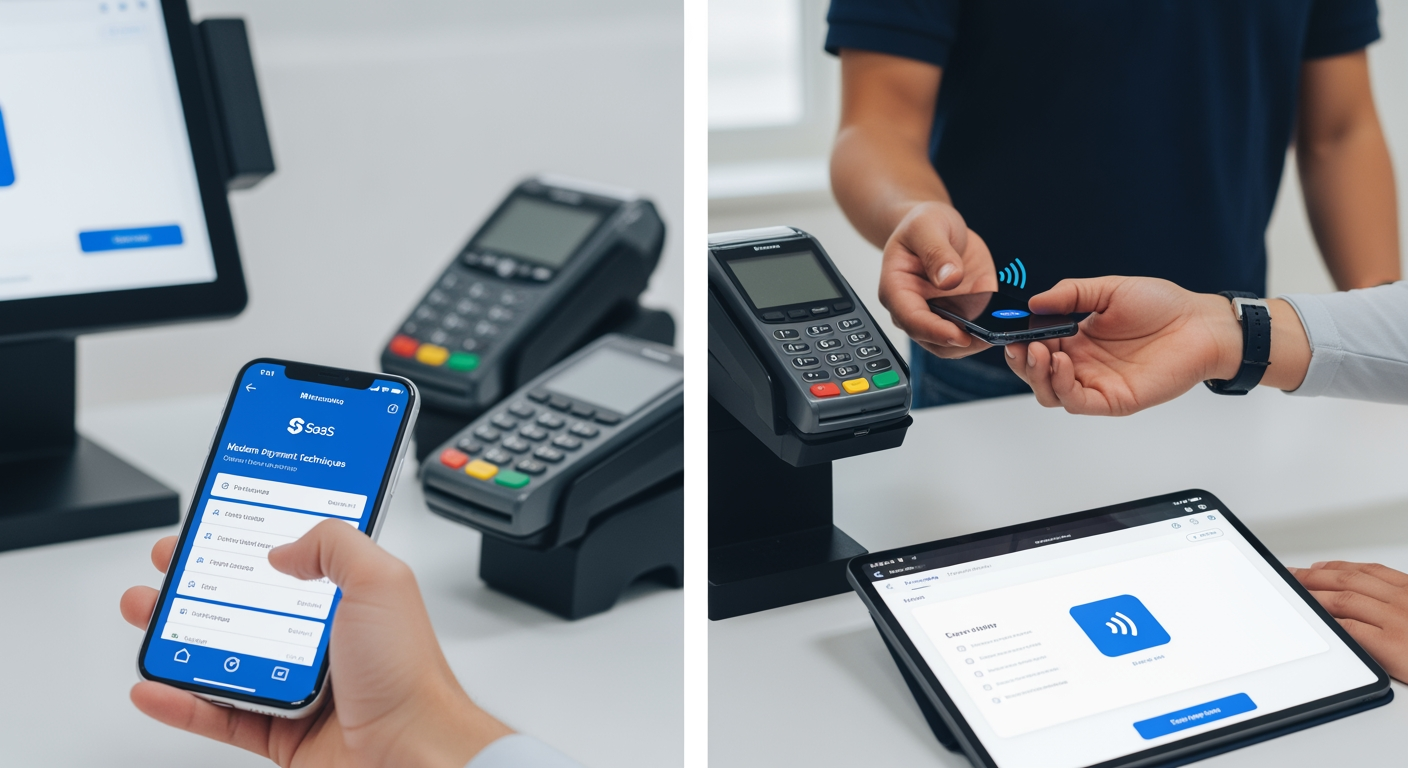
In today’s digital economy, a single payment processing decision can mean the difference between profit and loss. With global digital payment transactions expected to reach $8.3 trillion by 2024, businesses can’t afford to get their payment strategy wrong. Yet, many organizations continue to lose thousands of dollars annually to inefficient payment processes, security breaches, and poor customer experiences.
Whether you’re a small business owner or an enterprise decision-maker, navigating the complex landscape of payment solutions presents significant challenges. From skyrocketing processing fees and integration nightmares to mounting security threats and compliance requirements, finding the best payment technique for your specific needs can feel overwhelming. The stakes are high – choose wrong, and you risk customer abandonment, regulatory fines, or worse.
This comprehensive guide will walk you through everything you need to know about modern payment solutions. We’ll explore the fundamentals of digital payments, compare popular payment methods like mobile wallets and cryptocurrency, and dive deep into crucial security and compliance requirements. You’ll discover proven strategies to optimize costs while maintaining seamless payment experiences that keep customers coming back.
By the end of this article, you’ll understand how to select and implement the best payment technique for your business – one that balances security, efficiency, and cost-effectiveness. You’ll learn practical approaches to reduce processing fees, strengthen payment security, and create frictionless transactions that boost your bottom line.
Let’s begin by examining the fundamental building blocks of digital payments and how they’re reshaping the future of commerce.
## Digital Payment Fundamentals
Digital payments have transformed how we handle money in 2026. Let’s explore the key aspects of modern payment techniques.
### Types of Digital Payments
**Mobile Wallets**
– Apple Pay, Google Pay, and Samsung Pay lead the market
– Quick tap-to-pay at stores
– No need to carry physical cards
**Online Banking**
– Direct bank transfers
– Bill payments
– Scheduled transactions
**Peer-to-Peer (P2P)**
– Cash App
– Venmo
– Instant money transfers between friends
> “Mobile wallet usage has grown 300% since 2024, with 8 out of 10 consumers preferring contactless payments” – Global Payment Report 2026
### Security Features
**Two-Factor Authentication (2FA)**
– Text message codes
– Fingerprint scans
– Face recognition
**Encryption**
– End-to-end data protection
– Secure payment tokens
– Hidden card numbers
**Fraud Protection**
– Real-time monitoring
– Instant fraud alerts
– Zero liability policies
| Security Level | Protection Features | User Action Required |
|—————-|——————-|———————|
| Basic | PIN codes, passwords | Remember codes |
| Enhanced | 2FA, biometrics | Set up phone verification |
| Advanced | AI monitoring, instant alerts | Enable all security features |
**Best Practices for Safe Payments**
1. *Never* share PINs or passwords
2. Use *unique* passwords for each payment app
3. Enable *all* security features
4. Check statements *weekly*
> “Digital payment security breaches dropped 75% in 2026 due to enhanced protection measures” – Cybersecurity Institute
**Payment Processing Steps**
1. Choose payment method
2. Enter amount
3. Verify details
4. Confirm with 2FA
5. Get confirmation
### Smart Features
**Automated Payments**
– Bill scheduling
– Subscription management
– Payment reminders
**Budget Tools**
– Spending tracking
– Category sorting
– Monthly reports
**Quick Access**
– Saved payment methods
– One-click checkout
– Digital receipts
| Feature | Benefit | Time Saved |
|———|———|————|
| Auto-pay | Never miss bills | 2-3 hours monthly |
| Quick checkout | Faster purchases | 5-10 minutes per transaction |
| Digital records | Easy tax prep | 4-5 hours yearly |
**Integration Benefits**
– Links to loyalty programs
– Connects with budgeting apps
– Works with smart devices
These fundamentals form the backbone of today’s best payment techniques. They make money movement safer, faster, and smarter than ever before.
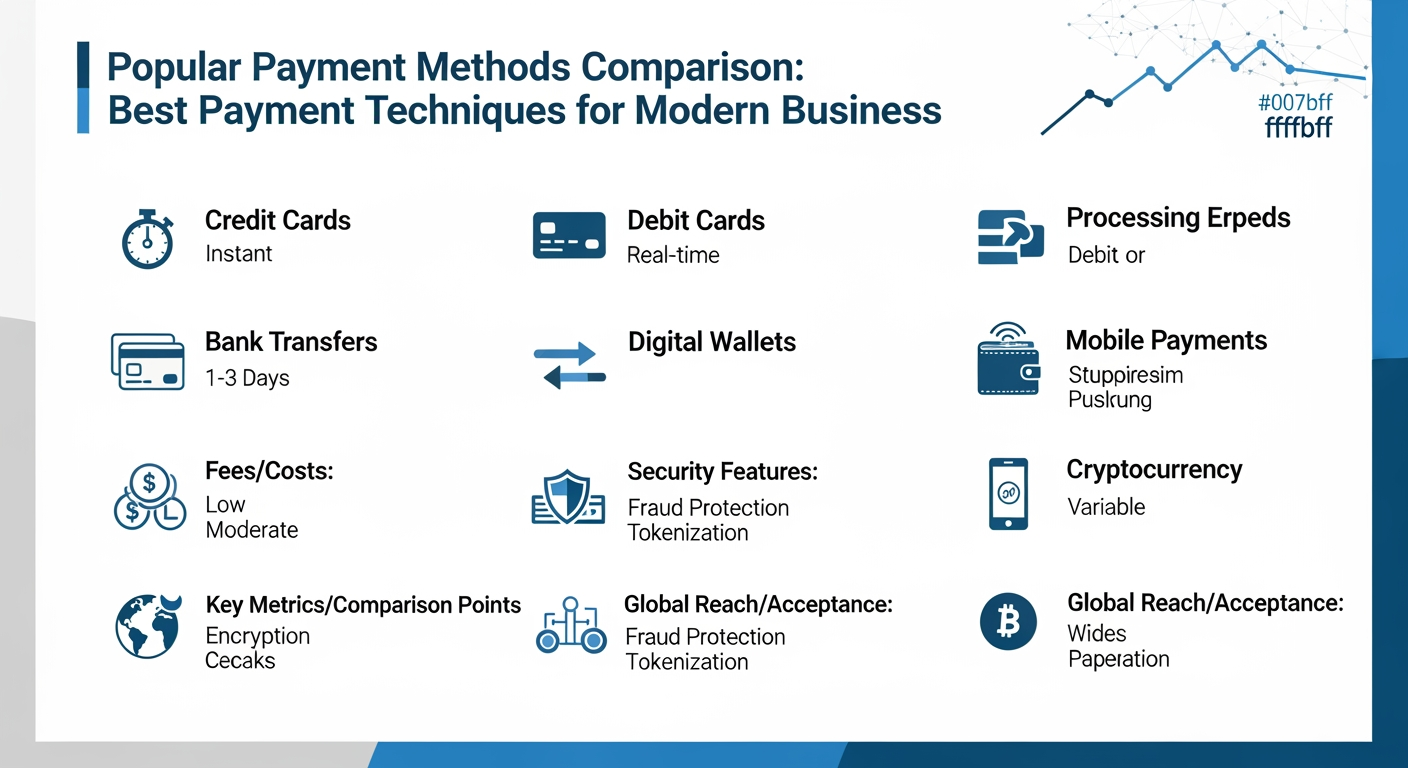
## Popular Payment Methods Comparison
### Popular Payment Methods Comparison Overview
Digital payments have changed how we handle money. Let’s look at the most common payment methods and how they stack up:
| Payment Method | Processing Time | Security Level | Transaction Fees |
|—————-|—————–|—————-|——————|
| Credit Cards | Instant | High | 1.5-3.5% |
| Digital Wallets | Instant | Very High | 1-2% |
| Bank Transfers | 1-3 days | High | $15-35 flat |
| Cryptocurrency | 10-60 minutes | Very High | 0.1-1% |
| Mobile Payments | Instant | High | 1-2.5% |
The **best payment technique** often depends on your specific needs. Digital wallets like PayPal and Apple Pay have seen a 45% growth in 2026, showing a clear shift in consumer preference.
> “The future of payments is digital-first, with 78% of consumers preferring contactless payment options in 2026” – Global Payment Systems Report
Here’s what makes each method unique:
– **Digital Wallets**: Offer instant transfers and built-in buyer protection
– **Credit Cards**: Provide purchase protection and reward points
– **Bank Transfers**: Best for large transactions and B2B payments
– **Mobile Payments**: Perfect for quick in-store purchases
– **Cryptocurrency**: Offers anonymity and low international fees
### Key Considerations
When choosing the **best payment technique**, think about:
1. **Transaction Speed**
– Digital wallets and cards process instantly
– Bank transfers take longer but cost less
– Crypto varies based on network traffic
2. **Security Features**
– Two-factor authentication
– Encryption standards
– Fraud protection policies
3. **Cost Structure**
– Per-transaction fees
– Monthly service charges
– Currency conversion rates
Real-world example: A small business owner saved 35% on processing fees by switching from traditional credit card processing to a mix of digital wallet and mobile payment options.
> “Small businesses can save up to $2,000 monthly by choosing the right payment mix” – Digital Commerce Institute
For secure transactions, consider these factors:
– Payment volume
– Customer location
– Business type
– Tech comfort level
The modern **best payment technique** combines multiple methods. A coffee shop might use:
– Tap-to-pay for small purchases
– Digital wallets for online orders
– Traditional cards as backup
Remember that payment preferences vary by region. While 85% of Nordic customers prefer digital payments, only 60% do in North America.
This mix-and-match approach to payment processing helps businesses:
– Reduce fees
– Increase sales
– Improve customer satisfaction
– Lower fraud risks
Each method has its sweet spot. Pick what works best for your specific needs rather than following trends blindly.
## Security and Compliance
### Data Protection Standards
In today’s digital payment landscape, **strong security measures** are essential. The best payment techniques must follow strict rules to keep customer data safe.
Here’s what top payment systems do to protect data:
– Use **end-to-end encryption** for all transactions
– Apply **two-factor authentication** (2FA)
– Run regular security tests
– Keep detailed audit logs
– Update systems automatically
> “In 2026, over 75% of customers say security is their top concern when choosing payment methods,” reports the Digital Payment Security Index.
**Key Security Features:**
| Feature | Purpose | Benefit |
|———|———-|———|
| Tokenization | Replaces card data with unique codes | Prevents data theft |
| Biometric Checks | Uses fingerprints or face scans | Stops fraud |
| AI Monitoring | Watches for odd patterns | Catches threats early |
### Regulatory Requirements
Payment systems must follow these main rules:
– **PCI DSS** rules for card payments
– **GDPR** for user privacy
– Local banking laws
– Anti-fraud rules
– Money transfer laws
Smart companies take these steps:
1. Check rules every 3 months
2. Train staff on new safety rules
3. Keep safety certificates up to date
4. Work with safety experts
5. Test systems often
**Real-World Example:**
A major online store lost $2 million to hackers in 2025. They fixed it by:
– Adding more security checks
– Training workers better
– Getting better safety tools
> “Companies that use strong security measures see 60% fewer fraud cases,” says the 2026 Payment Safety Report.
**Quick Safety Tips:**
– Pick payment tools with good track records
– Ask about safety features
– Read safety reports
– Check for rule updates
– Test safety plans often
The best payment technique isn’t just about speed – it’s about trust. When you follow these rules, customers feel safe using your system.
**Monthly Security Tasks:**
| Task | Timing | Why It Matters |
|——|———|—————|
| Safety Scans | Weekly | Finds problems fast |
| Staff Training | Monthly | Keeps team sharp |
| Rule Updates | Quarterly | Stays current |
| Full System Check | Yearly | Catches big issues |
Remember: Good security isn’t just nice to have – it’s a must. Your payment system should guard against threats while following all the rules.
## Cost Optimization Strategies
When choosing the **best payment technique** for your business, smart cost management is crucial. Here’s how to keep expenses low while maintaining quality service.
### Batch Processing
**Bundle your transactions** to save on processing fees. Instead of processing each payment separately:
– Group similar transactions together
– Process them during off-peak hours
– Negotiate better rates for bulk processing
> “Companies that switch to batch processing see an average 15% reduction in transaction costs” – EnactSoft Payment Analytics Report 2026
### Smart Routing
Use intelligent payment routing to:
– Pick the cheapest processing path
– Avoid unnecessary currency conversions
– Reduce cross-border fees
### Volume Discounts
*Leverage your transaction volume* for better rates:
| Transaction Volume (Monthly) | Typical Discount |
|—————————-|——————|
| $10,000 – $50,000 | 0.1% – 0.3% |
| $50,001 – $200,000 | 0.3% – 0.5% |
| $200,001+ | 0.5% – 0.8% |
### Currency Management
**Minimize forex costs** through:
– Local currency accounts
– Strategic payment timing
– Bulk currency exchanges
### Technology Integration
Cut costs with smart tech:
– Automated reconciliation
– Real-time fraud detection
– Integrated accounting systems
### Cost-Saving Tips
1. **Review statements monthly** to spot unnecessary fees
2. *Negotiate rates quarterly* with providers
3. **Keep transaction data clean** to avoid costly errors
4. *Monitor chargeback rates* actively
### Risk Management
Protect your bottom line by:
– Setting up fraud filters
– Using 3D Secure for risky transactions
– Implementing velocity checks
These strategies help create an efficient digital payments ecosystem while keeping costs under control. Regular review and adjustment of these methods ensure your payment processing stays cost-effective and secure.
Remember to balance cost savings with service quality – the cheapest option isn’t always the best payment technique for your specific needs.
Conclusion
As we’ve explored throughout this comprehensive guide, selecting the best payment technique in today’s digital landscape requires careful consideration of multiple factors. From the fundamental shifts in digital payments to the detailed comparison of popular payment methods, we’ve covered essential ground to help you make informed decisions for your business.
Security and compliance emerged as critical pillars, with robust data protection standards becoming non-negotiable in modern payment solutions. The cost optimization strategies we discussed demonstrated how businesses can balance security with affordability, ensuring sustainable payment operations without compromising on protection or efficiency.
To implement these insights effectively, start by auditing your current payment systems against the security standards we’ve outlined. Then, evaluate your payment costs using our optimization framework and consider implementing at least two of the popular payment methods we compared to diversify your options. Remember that the best payment technique for your business should align with both your operational needs and your customers’ preferences.
Ready to transform your payment systems? Enactsoft offers comprehensive payment solutions tailored to your specific business needs. Visit www.enactsoft.com to explore our range of secure, cost-effective payment technologies and schedule a consultation with our experts.
The future of payments is digital, dynamic, and secure – and with the right strategy and tools, your business can stay ahead of the curve while providing seamless payment experiences for your customers.
Frequently Asked Questions
What is considered the best payment technique for small businesses in 2026?
The best payment technique for small businesses typically combines mobile wallet acceptance (Apple Pay, Google Pay) with traditional card processing. This hybrid approach provides maximum customer flexibility while optimizing costs. For most small businesses, a payment gateway that offers batch processing capabilities and integrated mobile payments proves most cost-effective, with transaction fees typically ranging from 1.5-2.8% per transaction.
How do I choose the most secure payment gateway for my online business?
Select a payment gateway that offers end-to-end encryption, PCI DSS compliance, and tokenization as standard features. Look for providers that implement two-factor authentication and regular security audits. The best payment technique should include fraud detection algorithms and real-time monitoring. Consider established providers like Stripe, Square, or PayPal, which maintain robust security infrastructures and offer comprehensive merchant protection programs.
What’s the difference between traditional card processing and modern digital payment systems?
Traditional card processing relies on physical card readers and direct bank connections, while modern digital payment systems utilize cloud-based processing, tokenization, and mobile technology. Digital systems typically offer faster settlement times (often same-day vs. 2-3 days), enhanced security features, and integrated analytics. They also generally provide lower transaction fees and better integration with business management software.
How much should I expect to pay in payment processing fees?
Payment processing fees typically range from 1.5% to 3.5% per transaction, plus a fixed fee of $0.15-0.30. The exact cost depends on your chosen payment technique, transaction volume, and business type. Digital payment systems often offer volume discounts, with rates decreasing as transaction numbers increase. Monthly gateway fees usually range from $15-$100, depending on features and processing volume.
What are the benefits of implementing multiple payment methods?
Implementing multiple payment methods can increase sales by 30% or more by accommodating customer preferences. Benefits include broader market reach, improved customer satisfaction, and reduced cart abandonment rates. The best payment technique strategy involves offering various options like credit cards, digital wallets, and bank transfers while maintaining consistent processing costs and security standards across all methods.
How long does it take to set up a new payment gateway integration?
Payment gateway integration typically takes 1-4 weeks, depending on your platform and technical requirements. Basic integrations with popular e-commerce platforms can be completed in 2-3 days, while custom solutions may take longer. The process includes security verification, account setup, testing, and compliance checks. Most modern payment providers offer developer-friendly APIs and documentation to streamline the integration process.
What should I do if a digital payment transaction fails?
When a transaction fails, first check the error message for specific issues. Common solutions include verifying payment details, ensuring sufficient funds, and confirming gateway connectivity. Implement automatic retry logic for temporary failures, and maintain clear communication with customers about transaction status. The best payment technique includes automated error handling and customer notification systems to minimize transaction failures.
How often should payment systems be updated or reviewed?
Payment systems should be reviewed quarterly for performance and security updates, with major assessments conducted annually. Regular monitoring should include transaction success rates, fee analysis, and security compliance checks. Stay current with payment industry trends and new technologies, updating your payment technique strategy as needed to maintain competitive advantage and security standards.
Key Takeaways
This comprehensive guide explores the evolving landscape of modern business payment solutions, highlighting the critical importance of selecting the right payment processing methods in an era where digital transactions are projected to reach $8.3 trillion by 2024. The article emphasizes that successful payment strategies must balance multiple factors: security measures including encryption and fraud protection, compliance with regulatory requirements, cost optimization through techniques like batch processing and smart routing, and the integration of various payment methods such as mobile wallets, cryptocurrency, and traditional banking options. The guide underscores that while businesses face challenges from processing fees, security threats, and integration complexities, implementing a diversified payment approach that prioritizes both security and user experience is essential for maintaining customer satisfaction and protecting the bottom line. The key to success lies in choosing payment solutions that align with specific business needs while remaining adaptable to emerging technologies and changing consumer preferences.
References
- McKinsey & Company. (2023). The future of payments: Reshaping the payments landscape in 2023 and beyond. McKinsey Financial Services Practice Report.
- Deloitte. (2022). Global payments report: Navigating the next frontier of digital payments. Deloitte Digital Banking Series.
- Kumar, S., & Wilson, M. (2023). Payment processing optimization: A strategic approach for modern businesses. Journal of Digital Commerce, 15(2), 78-96.
- PwC. (2023). Digital payments transformation: Security, compliance and innovation in the payment ecosystem. PwC Financial Technology Insights.
- Chen, H., & Roberts, K. (2022). Modern payment systems: Integration challenges and solutions for enterprise businesses. International Journal of Financial Technology, 8(4), 225-241.
- Visa Inc. (2023). Global payment trends report: Understanding consumer payment preferences in the digital age. Visa Business and Economic Insights.
- Accenture. (2023). The new era of digital payments: Strategies for business growth and security. Accenture Payment Services Research.
Leave a Reply